Start with the measurements
Energy monitors answer two related questions: how much electricity is being used right now, and how much has been used over time. Instantaneous power is usually shown in watts or kilowatts. Energy use accumulates over time and is usually shown in kilowatt-hours. A device drawing 100 watts for ten hours uses one kilowatt-hour. Keeping that distinction in mind makes charts and appliance comparisons easier to interpret.
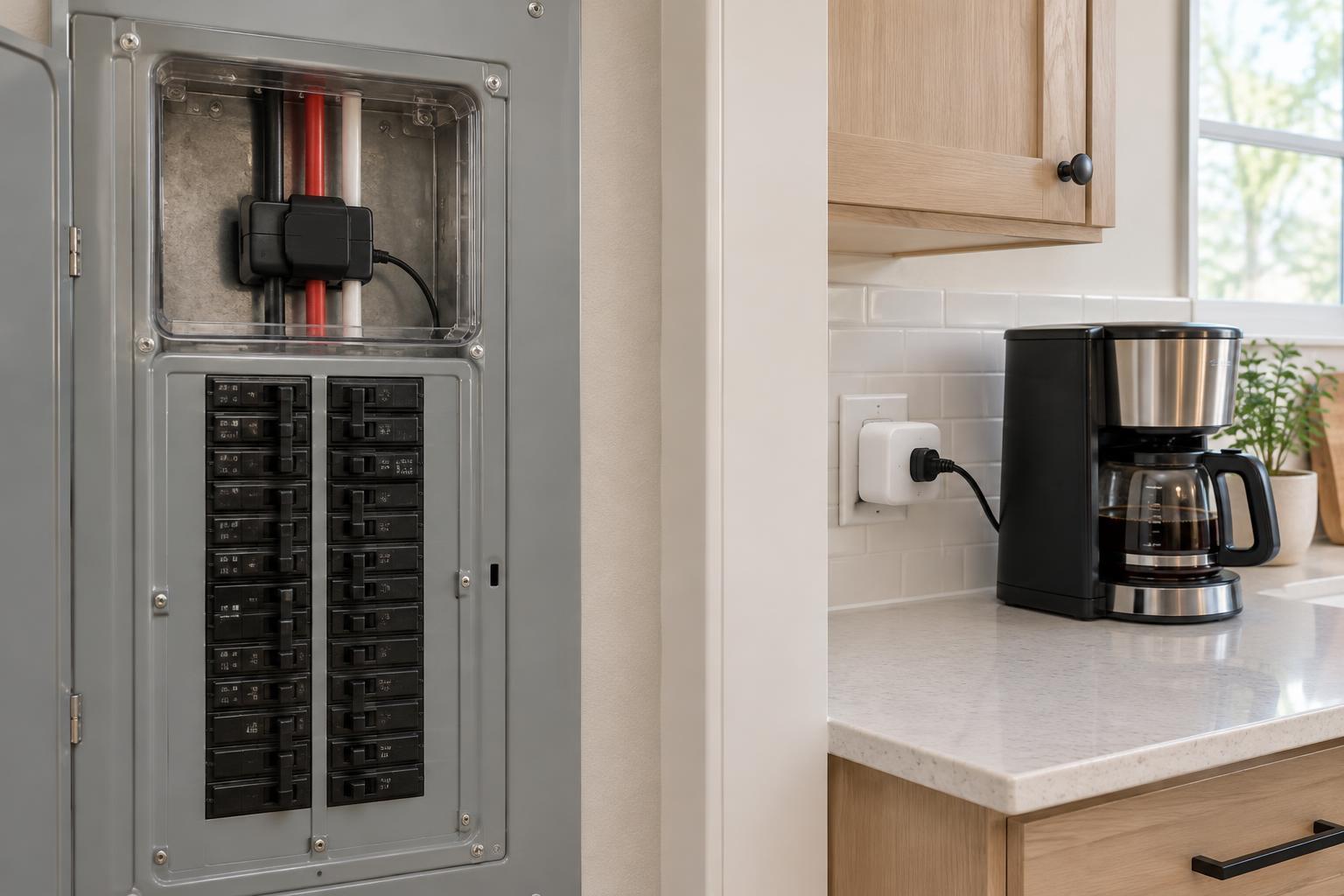
A whole-home monitor observes electricity flowing through the home's main supply, often using sensors installed at the electrical panel. It can show total power use as household loads turn on and off, and it can accumulate that use into daily or monthly totals. A device-level monitor measures a particular load, commonly through a smart plug placed between an outlet and an appliance. Some systems instead monitor a dedicated circuit. The difference is the boundary being measured: the entire home, one circuit, or one device.
What a whole-home monitor can reveal
Whole-home monitoring is useful for seeing the overall pattern. It can show whether a home has a substantial overnight baseline, when demand tends to peak, and whether a change in habits or equipment coincides with lower total use. Because it sees the main supply, it includes loads that a smart plug cannot easily reach, such as built-in heating, a water heater, or other hardwired equipment.
That broad view does not automatically identify every appliance. A monitor may detect a sharp increase when a large load starts, but several devices can operate at once, and many have variable power draw. Software that labels appliances from their electrical patterns is making an inference, not taking a separate measurement at each device. Treat those labels as leads to investigate, especially for smaller or similar-looking loads.
Homes with solar panels, batteries, or more than one electrical panel require particular attention to what the sensors cover. Depending on the installation, a reading at the main supply may represent electricity imported from the grid rather than all electricity consumed in the home. Check whether a system separately measures generation, storage, and household use before relying on its charts to explain energy flow.
What device-level monitoring adds
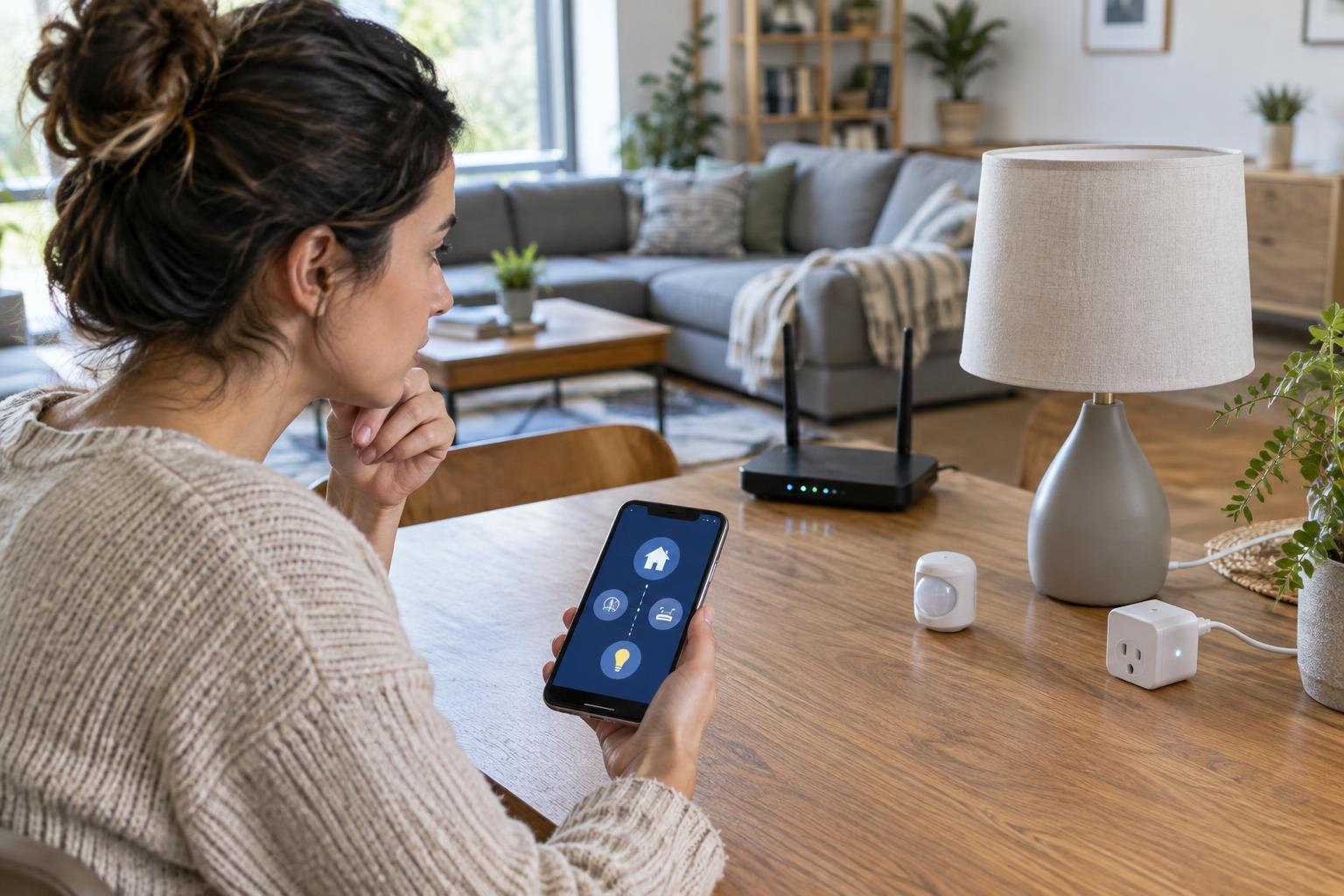
A plug-in monitor gives a clearer answer for a compatible appliance: it measures the power passing through that plug and records the energy used over a chosen period. It can help distinguish a refrigerator's cycling from the rest of the home's activity, compare a computer setup when active and idle, or measure how much an occasionally used appliance contributes over several weeks. Some smart plugs also provide schedules or remote switching, but those controls are separate from the measurement itself.
Device-level readings have limits too. A plug monitors only what is connected through it; it will not account for other outlets on the same circuit. It must also be suitable for the appliance's plug type and electrical load. Large, hardwired, or specialized appliances may need a different monitoring approach rather than a standard smart plug. Circuit-level monitoring can cover such loads, but a shared circuit still cannot identify which connected device used the energy without further investigation.
Choose the scope that matches your question
If the question is “When does my household use the most electricity?”, start with a whole-home view. If it is “How much does this particular appliance use?”, measure that appliance directly where practical. Combining the two can be more informative than either alone: a whole-home chart points to a time period worth examining, while a device-level reading can confirm whether a suspected appliance explains part of the change.
Before buying, consider what the equipment actually reports and how you will access the data. Look for clear power and energy readings, a history long enough for your comparison, and a way to export data if you want to keep it. If a monitor depends on an app or cloud account, consider whether that arrangement suits your privacy preferences and whether the basic readings remain accessible if connectivity is interrupted.
Use readings as evidence, not a complete explanation
For a useful comparison, record the measurement period and keep relevant conditions in mind. Heating and cooling use, appliance settings, occupancy, and weather can all change between two days. A short spike may identify when something switched on, but energy accumulated across a representative period tells you more about its contribution to total use. Comparing the same appliance in similar conditions is often more useful than comparing unrelated days.
Neither monitoring approach fixes an energy problem by itself. Its value is in narrowing the question: whether total use is changing, which device deserves a closer look, or whether a planned change made a measurable difference. Panel-installed sensors involve electrical work; use an appropriately qualified installer rather than opening a panel to fit them yourself. Start with the measurement boundary you need, then add detail only where it will help you make a decision.