Two devices with different jobs
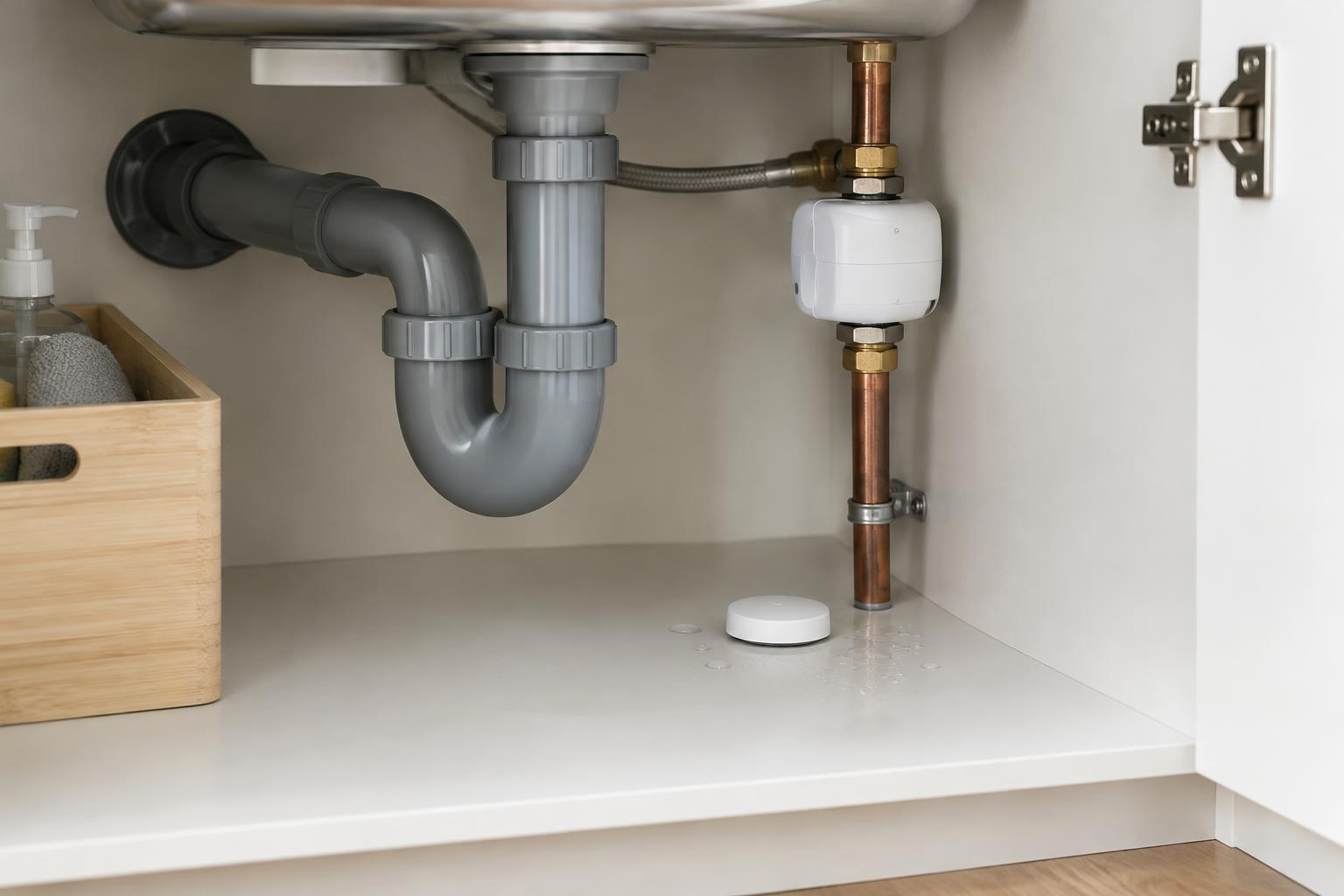
A water leak sensor detects moisture where it should not be. A typical sensor has exposed contacts near its base; when water bridges them, the device signals an alarm. Some models use a cable-style probe that can cover a wider area. On its own, a sensor may sound a buzzer or send a phone notification, but it cannot stop the water.
An automatic shutoff valve performs that second job. It closes a water line after receiving a command from a compatible sensor, hub, or controller. Depending on the design, the device may turn an existing valve handle or use a motorized valve installed in the pipe. Together, the sensor and valve turn a warning into an action: detect water, send a signal, and close the supply.
What happens when a leak is detected
In a connected setup, the sensor sends an alert over a supported wireless connection or through a wired link. A hub, controller, or built-in receiver interprets that alert and tells the valve to close. The system may also sound a local alarm and notify a phone. The exact path matters: some systems can shut off water locally even if the internet is down, while others depend on a cloud service for certain automations or notifications.
Check whether the sensor and valve can communicate directly, require a particular hub, or merely work within the same app. Being able to view two devices in one app does not necessarily mean one can trigger the other. Also check what happens if power, Wi-Fi, or the hub fails. A valve with battery backup or a locally stored automation may offer protection during some outages, but capabilities vary by product.
Place sensors where water would collect
Sensors work best at likely leak points: beside a washing machine, under a sink, near a dishwasher, or by a water heater. Put the sensing contacts where escaping water would reach them early. A sensor on a shelf may stay dry while water spreads across the floor. If a cabinet has a raised lip or a room slopes toward a drain, consider how those features could redirect water before choosing a spot.
One sensor cannot cover every possible leak. Separate sensors can monitor distant fixtures, and a probe cable may help along a wider edge. Avoid placing contacts where routine splashes or condensation will repeatedly trigger alarms. After positioning a sensor, confirm that it still has a reliable connection to the hub or receiver, especially if it sits behind an appliance or inside a cabinet.
Choose the right shutoff point
A valve fitted to the main water supply can stop flow to many fixtures at once. That broad coverage is useful when sensors are spread throughout a building, but it also means a false alarm can interrupt water everywhere downstream of the valve. A valve on an individual appliance line affects a smaller area, though it will not protect other branches of the plumbing.
Before selecting a valve, identify which pipe it would control and whether the existing manual valve is accessible and in good condition. A motor that turns a stiff or damaged handle may not close it reliably. An in-line motorized valve requires a suitable installation location and work on the plumbing itself. If installation or valve condition is uncertain, have a qualified plumbing professional assess it. Keep any manual shutoff accessible and make sure occupants know where it is.
Test the complete chain, not just the app
A status screen showing devices as connected does not prove that the valve will close when a sensor gets wet. Follow the manufacturer’s test procedure for each sensor and, when practical, perform a controlled test that triggers the full automation. Confirm that the alarm sounds, the expected notification arrives, and the valve moves to its closed position. Then reopen the valve using the recommended procedure and verify that normal water flow returns.
Repeat checks after replacing batteries, moving a sensor, changing a hub, or updating automations. Keep sensor contacts clean, monitor low-battery warnings, and learn how to operate the valve manually if the system allows it. Leak protection can reduce the amount of water released after a detectable leak, but it is not a substitute for maintaining plumbing: water must reach a working sensor, and the valve must be able to close the affected supply line.